Saturday, June 26, 2010

People, Culture and Language of Nepal

In Nepal ethnically cultural groups are diverse and many of them have their own language and customs. However they can be geographically categorized according to their habitats. The Sherpas who are of Tibeto-Burman stock mainly occupy the higher hills of eastern and central Nepal. The Solu Khumbu region, where the world tallest peak Mt. Everest stands, is inhabited by Sherpas. Generally they are Buddhist but some follow the Bon, the pre-Buddhist religion of Tibet, and other religions. The Sherpas are famed for their valor and mountaineering skills and are professionally in many mountain expeditions. Today Sherpas have joined other occupations as well like business administration and politics. A wide variety of ethnic groups occupy the mid hills. The Kirat or Limbus and Rais inhabitant the east. During the 7th century BC, they established a dynasty in the Kathmandu valley and ruled it for 1000 years. They are not originally Hindus and Buddhist but are ancestors worshippers. However today many embrace Hinduism. In former days they are warriors and skilled hunters. The Kirato speaks Tibeto-Burman languages. Many serve in the British Army today and have earned a reputation as the brave Gurkhas.The population of Kathmandu valley consists mostly of Newars. They speak Nepalbhasa and practice Hindusim and Buddhism. Many family celebrate Hindu and Buddhist festivals. Their culture also reflects tantrism and animism. Newars are accomplished in commerce and most enterprises in the heart of the valley are run by them. Historically they are well known for establishing the three artistically beautiful cities of Patan, Bhaktapur and Kathmandu. The inhabitants of the hill flanks surrounding Kathmandu Valley are mostly Tamangs, who make up one of the largest Tibeto-Burman ethnic groups in the kingdom. In the Tibetan language, Tamang means"horse soldier" which gives us an idea about their past occupation. Today they farm and work as semi-skilled and unskilled labourers. The Magars live in the western and central hills of Nepal. They had their own kingdoms until the 18th century and were closely associated with the Hindu Indo-Aryans in the west. Much of their cultural practices have been influenced by Chhetris, and today it difficult to make any difference in the housing, dressing and farming practices of the two. The Magars have been sought after by the british and Indian Armies and a great number serve in the Gurkha regiments. Another ethnic group closely resembling the Magars in many aspects are the Gurungs. They also live in the western and central hills of the country although further to the east. Of Tibeto-Burman stock, the Gurungs have their own distinct language and practice shamanism. The Kha are the Bahuns and Chhetris who formed their own kingdom in the far west. They are Hindu and Nepali which is the country official language, was originally spoken by the khas. Traditionally the Bahuns were priests and are better educated than most ethnic groups. In fact many occupy important government and educational posts in the kingdom today. The Chhetri have traditionally been known as warriors. The Tharus are one of the original ethnic groups to inhabit the Terai. The Majhi, Danuwar, Rajbansi, Darai, Satar and Dhimal also occupy the flat lands. The Tharu have their own unique religion and practice animism. Their culture is especially suited for hot plains. They Mongoloid features and speak their own language.

Religious sites of Nepal

There are lot of religious sites outside Kathmandu. Some of the famous sites are as follow
Lumbini: Lumbini is the birthplace of Lord Buddha, the apostle of peace, compassion and non-violence. It is situated in the Kapilvastu District in the Lumbini Zone western Terai of Nepal, 250 kilometers southwest of Kathmandu. The broken Ashoken pillar, remnants of an old monastery, and image of Buddha's mother Maya Devi are in Lumbini. It is accessible by air from Kathmandu to Bhairahawa from where one can proceed by car or by other means of transport.
Muktinath: Muktinath is an important place of pilgrimage for Hindus. The famous temple of Lord Muktinath lies in the district of Mustang. This temple is situated on a high mountain range and is visited during the fair weather. During the Janai Purnima and Ram Navami festivals devotees gather there to pay homage to lord Muktinath. Muktinath is situated about 18 km northeast of Jomsom at an altitude of 3,749 meters. There are two ways to get to Muktinath from Kathmandu. The first way is to take a direct flight from Kathmandu to Jomsom and hike for a couple of hours via Kagbeni. The next way to trek all the way from Pokhara which takes about 13 to 15 hours.
Janakpur: This is a great religious place famous as the birthplace of Sita, the consort of Lord Rama and the heroine of a great Hindu epic, the Ramayan. There is an artistic marble of temple of Sita popularly known as Naulakha Mandir which means "built at the cost of Rs 900,00". Religious festivals, pilgrimages, trade fairs and other festivities are held here on Bivaha Panchami and Ram Navami days.
Barahachhetra: A few kilometers from the main city of Biratnagar, on the bank of the Koshi River, lies a holy place of Hindu pilgrimage called Barahachhetra. It is the temple of lord Baraha, the boar incarnation of Lord Vishnu. Historians have traced the existence of this image to the twelfth century.

Gosainkunda: One of the most famous religious places of pilgrimage in Nepal is Gosainkunda. The best approach to Gosainkunda is through Dhunche 132 kilometers northeast of Kathmandu. The religious lake is situated at an altitude of about 4360 meters. Dhunche is linked with Kathmandu by a motorable road surrounded by the high mountain on the north and the south, by higher landscape on the east and west, this kunda(Lake) is grand and picturesque. On the east and west of kunda, there are 9 other famous lakes including the Saraswati Kunda, Bhairav Kunda, Sourya Kunda and Ganesh Kunda.

Places to see inside Valley

Nyatapole Temple in Bhaktapur, Nepal
The Kathmandu Valley, the political and cultural hub of Nepal is the first stop for the majority of visitors to the country. It has separate kingdom itself, it contains three fabled cities- kathmandu, Patan, and Bhaktapur. Each cities is an artistic exposition of graceful temples, elegant palaces, brick-paved courtyards and quaint streets. There are seven UNESCO World Heritage Sites in the Valley. The history of the Valley begins with the Buddhist saint Manjushree who slashed a passage through the surrounding hills to drain out the primordial waters and make it inhabitable. Over the centuries, a refined urban civilization emerged, built on a unique synthesis of Hinduism and Buddhism Dynasties came and went. Trade and the arts flourished. Its deeply-religious Newar inhabitants built fabulous cities and artistic temples that attracted devout pilgrims as well as rampaging invaders.

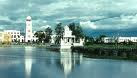
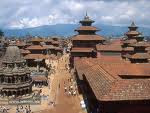
Places to see at Kathmandu Valley are:


Durbar Square: This complex of palace, courtyards and temples, built between the 12th and 18th centuries, used to be seat of the ancient Malla kings of Kathmandu. The Durbar Square, protected as a UNESCO World Heritage Site, is the social religious and urban focal point of the city. There are also three museums inside the palace building.
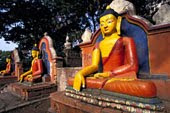
Swayambhu Stupa watches over the Valley from the top of a hillock on its western side. The huge stupa is one of the holiest Buddhists sites in Nepal and its establishment is linked to the creation of the Kathmandu Valley out of primordial lake. Swayambhu is also known as Samhengu and is listed as World Heritage Site. Balaju consists of a sprawling garden of stone water spouts, religious shrines, fish ponds, and a replica of statue of Budanilkantha. Situated below Nagarjun hill about 3 km northwest of the city center. Balaju is also known for its bank of 22 stone water spouts carved in the shape of sea-dragons.
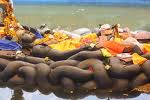

Budhanilkantha is situated below Shivapuri hill at the northern end of the Valley. It is about 9 km from the city center. The hub of the temple complex is a pond in which lies a great stone figure of the Hindu god Vishnu reclining on the coils of a cosmic serpent.
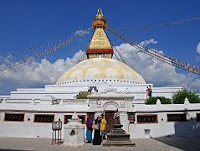
Boudhanath Stupa lies about 6 km to the east of downtown Kathmandu and is the largest stupa in the Valley. It looms 36 meters high and presents one of the most fascinating specimens of stupa design. Boudhanath, a World Heritage Site is also known as Khasti. Pashupatinath Temple one of the most sacred Hindu shrines in the world, Pashupatinath lies 5 km east of the city center. The richly-ornamented pagoda houses the sacred linga or phallic symbol of Lord Shiva. Devotees can be seen taking ritual dips in the holy Bagmati river flowing beside the temple also a World Heritage Site.
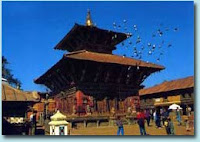
Changu Narayan Temple is situated on a ridge overlooking the Valley about 12 km to the east of the city. It is dedicated to the Hindu god Vishnu. One of the finest and oldest specimens of pagoda architecture, the temple is embellished with exquisite wood and stone carvings. Kirtipur is situated on a ridge 10 km southwest of Kathmandu. The ancient Newar township is a natural fortress and has a proud and courageous history. The Chilamchu stupa and the temple of Bagh Bhairav are major sites here.
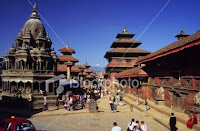


Patan's Durbar Square like its counterpart in Kathmandu, is an enchanting melange of palace buildings, artistic courtyards and graceful pagoda temples. Listed as a World Heritage Site, the former royal palace complex is the center of Patan's religious and social life, and houses a museum containing an array of bronze statues and religious objects. One remarkable monument here is a 17th-century temple dedicated to Hindu god Krishna, built entirely a stone.
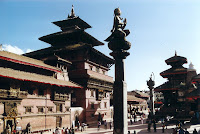
Kwa Bahal is a Buddhist monastery courtyard dating back to the 12th century. It is a five minute walk west and north from the northern end of Durbar Square. The monastery building is embellished with exceptionally fine wood carvings and repousse work. Artistic image are scattered around the courtyard and devotees can be seen offering worship at many shrines here.
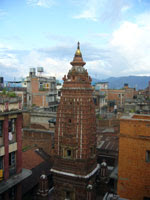
Mahaboudha can be reached by walking east from the southern end of Durbar Square and then turning right at the sunken water taps. This Buddhist monument is an excellent example of terra cotta artform which points to skill of Patan's ancient craftsmen with variety of buildings styles.
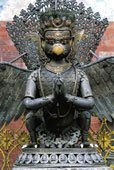
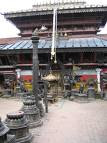
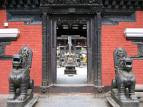


Uku Bahal is situated a few steps past Mahaboudha and is one of the best known Buddhist places of worship in Patan. The stone paved courtyard is enclosed by a two story building with glided roofs. The wood carvings on the roof struts are especially attractive. The place is peppered with sacred images and other small shrines. The Central Zoo in Jawalakhel is a pleasant diversion after a tour of the cultural sights. It contains about 106 species of birds and over 665 different animals. There is also a pond where you can go boating. Open daily except Monday from 10 am to 4 pm.

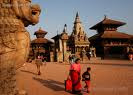
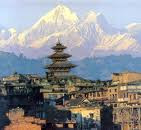
Bhaktapur Durbar Square. As you walk in, you cannot but be overcome by feeling of inner harmony. Such is the art and architecture and the spatial layout here. The 15th-century Palace of 55 Windows, situated to the left as you enter through the city gate, inspires admiration. The National Art Gallery is also housed inside. The entrance to the palace, the Golden Gate, is a masterpiece in repousse art.
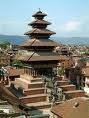
Taumadi Square lies to the east of Durbar Square reached by a narrow brick-paved lane. The towering five-roofed Nyatapol temple presides over the square. The stairway leading up to the temple is flanked by stone figures of deities and mythical beasts, each 10 times more powerful than the one immediately below.


Dattatreya Square takes its name from the Dattatreya temple dedicated to a three headed combination of the Hindu Deities Brahma, Vishnu and Shiva. The Square is famed for its many ornate Hindu monasteries known as Math. The 15th-century Pujari Math is the most famous among the nine here and the building is decorated with the finest wood carvings, including the celebrated Peacock Window. The National Wood working Museum is also housed here and the Brass and Bronze Museum is across the street.
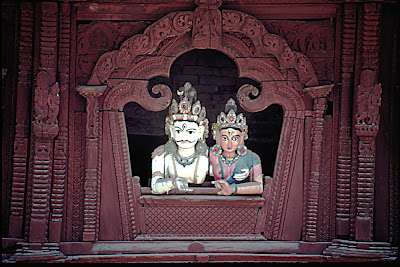

The Hindu god Shiva and goddess Parvati watch over the people of Kathmandu, Nepal

Religion of Nepal


Welcome to Nepal

In Nepal religion is not just belief-it is performance.Festivals are the great performances-cast of thousands magnificent chariots, masked dancers, lights and flowers and red tika powder. Household pujas are the small, personal performances-communion with god and goddesses at the family shrine in the kitchen or prayer room. Deities and minors spirits dwell everywhere, influencing and enriching the lives of all Nepalese.The god and goddess bring the people protection from misfortune, luck and prosperity, and inspiration in marriage. In return, the deities are given offerings and prayers of devotion and love. Most deities delight in flower, light, rice and vermilion powder of dozen shades of red. Some like liquor, some like blood, and almost all like music, dance and excursions around town in their chariots. There are thousands of deities in Kathmandu; it is like living in an invisible city. There are deities of different ages, classes, history and power: pesky minor spirits, unfortunate souls living as demons, powerful valley gods and the great deities of Hindu and Buddhist traditions. All are present and their presence informs the rich, complex culture of Nepal. Every morning, women or children walk out to a shrine in their neighbourhood. Perhaps the image within a clan god or perhaps the Ganesh, who will bring luck for the coming day. The worshipper carry a small pot of water and tray of offerings: flower, red tika powder, rice and wick lamp. A paste of the red powder is put on the god's forehead, the eyes of wisdom. And this tika is returned to the people, blessed with the power of deity, as they stop by the shrine during the day to put a spot of the god's tika on their own foreheads. In Nepal each home has its own group of gods and goddesses, according to the tradition, needs and inclination of the family: often Laxmi for prosperity or the divine couples Shiva and Parbati or Krishna and Radha for conjugal happiness. If the child is ill, the family may go to the temple of Sitala Ajima, the goddess of childhood diseases, on Swayambhunath hill. Each morning, the Tibetan Buddhist offers seven bowls of water at the family altar, abstract offerings of light, incense, music and other delights for the lamas, the Buddha and Budhisattvas, and the Dharma itself. Every corner of society is penetrated by the religion of small spirits. Iron pegs are pounded into the threshold of a shop to keep malicious spirits away. Pictures of Nag are pasted over the doors. Rituals must be performed before a house is built to propitiate the Nags who is living in the ground beneath. Religion knits the society with many small rituals of family unity. On Bhai Tika, during the festival of Tihar, brothers sit before their sisters to receive a multicolored tika of devotion. On Matatirtha, people go to " look upon their mother's face" reflected in a sacred pond. At Dashain, Tihar and many other festival times, everyone visits every extended family member within reach. Two forms of religion predominate in Nepal. Multifaceted Hinduism-the state religion-is the largest and most visible. There are two forms of Buddhism:Tibetan Vajrayana, the old Buddhist religion of the Valley, perhaps in part a remnant of the North Indian Buddhism which thrived before Muslim crusades. Within Nepal's multiplicity of caste and ethnic groups, there are hundreds of different religious practices and thousands of gods are worshipped by almost everyone. The white Lord of Compassion is Seto Machhendranath to Hindus and Newar Buddhists and Chenrezig to Tibetan Buddhists;lovely Saraswati, Hindu goddess of learning, is Buddhist Manjusri, the young god of wisdom holding a flaming sword. And everyone knows there's a Nag, or snake-god in every little pond

Adventure of Nepal

If the Kathmandu is the hub of Nepal then Pokhara is the adventure.An enchanting city nestled in a tranquil valley, it is the starting point for many of Nepal's most popular trekking and rafting destinations.
Pokhara is a place remarkable natural beauty. The serenity of Phewa Lake and the magnificence of the fish-tailed summit of Machhapuchhre rising behind it create an ambiance of peace and magic. The valley surrounding Pokhara is home to thick forests, gushing rivers, emerald lakes and of course the world famous views of the Himalya. Pokhara is part of a once vibrant trade route extending between India and Tibet. This is the land of Magars and Gurungs, hardworking farmers and valorous warriors who have earned worldwide fame as Gurkha soldiers. Clearly the most stunning of Pokhara's sight is the spectacular panorama of the Annapurna range which forms its backdrop.Stretching from the east to west, the Annapurna massif includes Annapurna I to IV and Annapurna South.Boastfully levitating in the skyline, the fish-tailed pinnacle is the archetypal snow-capped needle pointed mountain Phewa lake is the second largest lake in the kingdom roughly measuring 1.5 by 4 km, is the center of all attractions in Pokhara.Here one can sail or row a hired boat across to the water to visit the island temple in its middle. Begnas Lake and Rupa Lake are located about 15 km from Pokhara at the end of the road that turns north from highway to the Kathmandu. Divided by a forested hillock called Panchabhaiya Danda, the lake offer the perfect nature retreat because of their relative seclusion. Splendid boating and fishing opportunities can be had here. Barahi temple is the most important religious monument in Pokhara. Built almost in the middle of Phewa Lake, this two-storied pagoda is dedicated to the boar manifestation of Ajima, the protectress deity representing the female force shakti(power). Devotees can be seen especially on saturdays, carrying male animals and fowl across the lake to be sacrificed to the deity. Seti Gandaki is the Pokhara's natural wonders that unfailingly interests visitors. Flowing right through the city, the boisterous river runs completely underground at places. Its depth is quite beyond the imagination over 20 meters! Mahendra Pul, a small bridge near the old Mission Hospital, provides a perfect view of the river's dreadful rush and the deep gorge made by its powerful flow. Devi's Fall is an awesome waterfall lying about 2 km south west of Pokhara airport on the highway to Tansen. Legend has it that a trekker was washed away by the Pardi Khola and mysteriously disappeared down into an underground passage beneath the fall. Mahendra Gupha. Another of nature's wonders in Pokhara is the Mahendra Gupha. This large limestone cave is locally known as the House of Bats. The adventure sports in pokhara are especially boating and power gliding. Boating. Pokhara's diverse natural wonders make it an excellent setting for adventure sports. Sailing or paddle boating on Phewa Lake's emerald expanse is something no visitors to Pokhara would like to miss. Power Gliding is the latest in the roster of adventure thrills in Pokhara. Avia Club Nepal will take you up in a delta wing ultra light aircraft to give you a bird's-eye view of Pokhara's emerald lakes, green fields and deep gorges.

Wednesday, June 23, 2010

Travelling in Nepal

A favored season for Travelling in Nepal begins in Autumn. Visitors can relax and unwind in the soothing autumn sun to relieve physically and mentally from their routine affairs.Travelling can be a positive force in a world full of conflict and crisis. It can promote peace and understanding. Visitors should know about the Nepalese Superstitions, tradition, and beliefs because this is a part of responsible travel under which a visitor is aware of and takes into account the effects of his or her actions on the host's culture and sensitivities. There are basically two ways to travel in Nepal:"inclusively," that is,going through a trekking agency,hiring a guide,cook, and porters who setup camp and cook for you along the way; or going independently, staying in trekkers' lodges or peoples homes commonly called " tea house trekking".Wherever you trek you have to take enough warm clothes and adequate sleeping bags.One night at 3,000 m without enough warmth can spoil your entire trek. You have to take care more about your health . First two weeks you may experience some digestive disorder, but once it's over, a little care should prevent anything more serious. You have to drink boil water or properly treated with iodine. Make sure your medical kit has plenty of band aids and sterile dressing as well as antiseptic creams for minor scrapes and cuts. You would love to explore Nepal on foot but you are wondering whether the kids would.Could they handle walking all day up and down hills?Is it safe?Will they and you enjoy it?
With a little preparation and good sense,there is no reason why a trek with children should not be even more enjoyable than one without them.Villagers will be curious and friendly, and the experience will open your whole family's eyes to a world devoid of electricity, TV, radio, hot and cold running water, and wheeled transportation.
Many visitors are opting for a grand combination holiday of trekking, rafting, and jungle safari. Travel, trekking, or rafting agents can put together such a package, ushering you from trail to rubber raft to the back of an elephant with all logistics taken out of your hands.
Rafting routes and prices vary from agent to agent. Special group trips and rates can be arranged: the larger the group the cheaper the rate. Rafters camp and dine trekking style, drifting off to sleep to the sounds of the night-time river-life.Time is allotted on longer trips for exploring nearby hills and canyons. Kids seem to love life on the river. And all safety precautions are taken-life jackets are worn at all times while on the river to assure a thrilling and memorable trip.
Kathmandu's accessibility to several runnable rivers makes trips of one to eighteen days possible. The most popular runs are
1) the Sunkosi or river of gold, just east of kathmandu
2) the Arun, in the far east, perhaps the toughest for rafting
3) the Trishuli, which joins the Gandaki and reaches Narayanghat in the Terai.
4) the Marsyangdi, Seti, and Kali Gandaki rivers, which also reach the Terai and Chitwan Park